
Municipal Court Warrants in McLeod County
A municipal warrant is a city court's order on its own matters. It covers ordinance violations, citations, and failures to appear in that city's case file. The city clerk or court coordinator holds the answers. That matters here, because most criminal and traffic charges in McLeod County belong to McLeod County District Court instead. A person who checks only the county list may miss a city warrant entirely. The split, in other words, decides where you call.
No Countywide McLeod Municipal Warrant Database
McLeod County holds nine cities and no shared municipal warrant database. Each one stands alone. The sheriff's active list is a county table with no city filter, and it is not a municipal court index. Glencoe is the only city that publishes a detailed municipal court page, and Winsted publishes a payment route labeled for Winsted cases alone. Hutchinson, Brownton, Lester Prairie, and the smaller cities offer no public city warrant lookup. Checking each city means a phone call, not a portal, and the city office is the one that answers.
Which McLeod County Cities Have Municipal Courts
The table below shows what each McLeod County city publishes. Where a city runs no public court page, the listed route is the office that can explain the notice.
| City | Published Court or Process | What It Handles | Contact |
|---|---|---|---|
| Glencoe | Municipal Court, first and third Wednesdays | City ordinance and citation matters | Glencoe City Hall |
| Winsted | Citation payment route | Winsted citations only | 320-485-2366 |
| Hutchinson | No city court published | City prosecution of local matters | 320-234-4290 |
| Brownton | No city court published | City ordinance and traffic code | 320-328-5226 |
| Lester Prairie | No city court published | Shared police service with Winsted | 320-485-2600 |
Everything else filed in the county lands in District Court. Its criminal and traffic lines, 320-864-1282, 320-864-1283, 320-864-1760, and 320-864-1761, handle the case record in McLeod County.
Glencoe's First and Third Wednesdays
Glencoe, the McLeod County seat, is the one city with a real municipal court schedule. Sessions fall on the first and third Wednesday of each month. They start promptly at 3:00 p.m. There is a sign-in desk, and weapons are barred from the room. That city page also names the municipal judge and the court magistrate, and Glencoe's municipal court page lists payment methods plus a Court Solutions route for paying online or by phone.
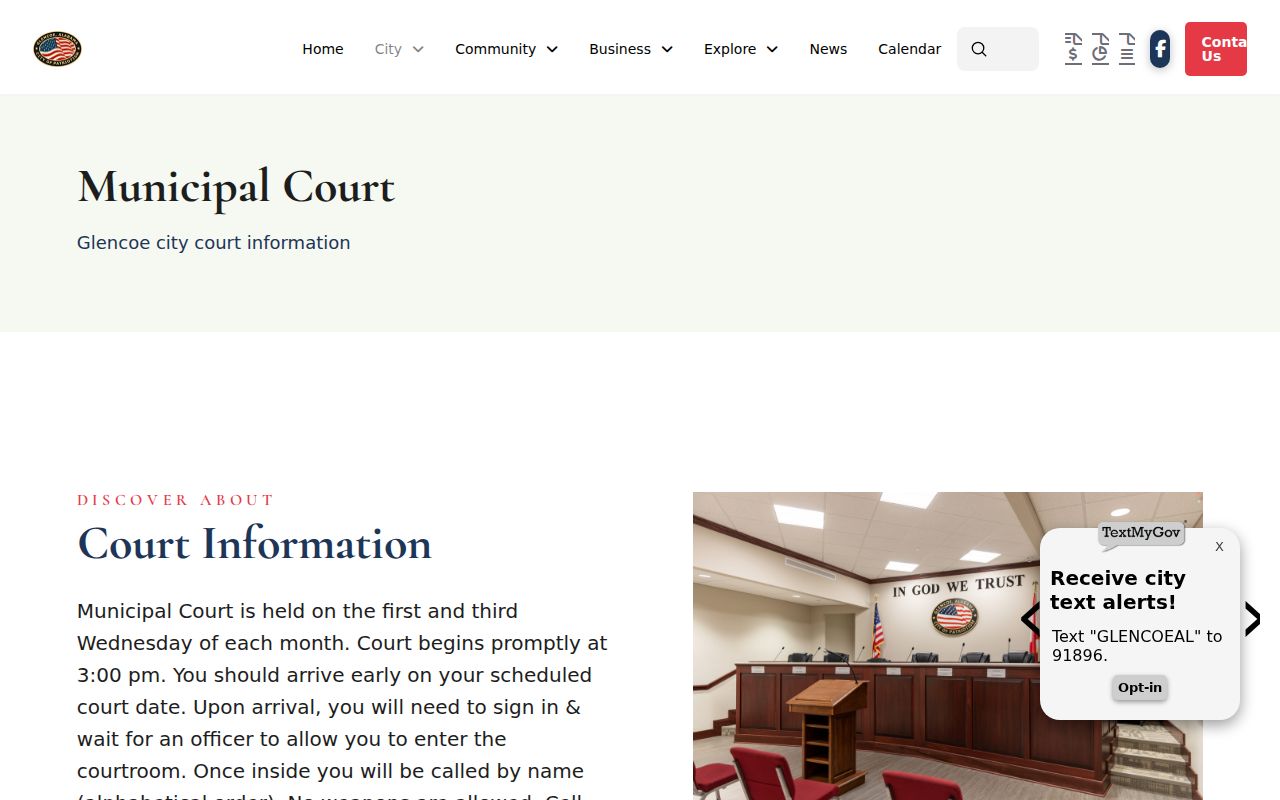
Two details on that page deserve caution. The clerk phone number shown carries an area code that does not match Minnesota. Verify the current number before relying on it. A payment through the city also does not by itself prove a warrant was recalled, so call Court Administration or dispatch in McLeod County to confirm.
How to Check a McLeod County Municipal Court Warrant
Start with the city printed on the notice, then work outward. Each step answers a different question, and the county channels are the fallback, not the first stop, for a McLeod County warrant check.
- Read the notice and identify the issuing city, the case or citation number, and the court date.
- Call the city clerk or municipal court coordinator and ask whether the city still holds a case and whether a warrant issued.
- Ask whether the city matter was transferred to McLeod County District Court, and if so, ask for the case number.
- Check the sheriff's active warrant table and Minnesota Court Records Online for the county side of the matter.
- Confirm the current status by calling dispatch at 320-864-3134 or 320-484-4397 before you take any action.
Most cities have no public warrant search, so the telephone is the practical channel.
What to Ask About a McLeod County City Warrant
The city office controls the local record. A short list of questions gets a useful answer in one call. Ask whether the case is still open, whether a warrant was issued, what the fine or bond amount is, and what a payment actually resolves. For court matters in McLeod County's county seat, the Glencoe Police Department's public page is separate from the city court. A citation question belongs with the court clerk or coordinator, not with an officer.
Ask whether the city reports any outcome to McLeod County. If the case is heading to District Court, get the case number before you hang up.
What a McLeod County Municipal Court Warrant Shows
A city warrant record is short. It names the case, the ordinance or citation, the amount, and the McLeod County court that holds it.
| Warrant / Case Number | A city-assigned identifier, shown in a city-local format such as GMC-2026-0147. |
|---|---|
| Subject Name | The name on the city case file. |
| Ordinance / Charge | The city code section or the citation offense. |
| Issuing Court | The city court that set the case. |
| Fine or Bond | The amount the city recorded. |
| Status | Active, paid, or recalled. The city clerk confirms it. |
City warrants rarely include a bond schedule or a recall form. Ask what the McLeod County city accepts and what it files.
A City Payment Is Not Proof a McLeod County Warrant Closed
Money and status are separate things in a city case. A payment can settle a fine while a failure-to-appear event stays open. A city receipt does not reach into the county system. After any city payment, ask the clerk three questions: whether the case is closed, whether a warrant was ever issued, and whether the outcome goes to McLeod County. Then confirm the county side with dispatch, and keep the receipt with the case number until both answers line up.
Resolving a McLeod County Municipal Court Warrant
The city court controls its own cases, so resolution runs through the clerk, the court date, and any payment or appearance the McLeod County city requires.
- Call the city clerk and confirm the warrant, the amount, and whether the case qualifies for a new court date.
- Ask whether payment, a payment plan, or an appearance is the step that clears the warrant in that city.
- Attend the court date or complete the required payment, then ask for confirmation in writing if the city provides it.
- If the case moved to District Court, treat it as a county case and call the criminal or traffic line for the next step.
Caution: a city warrant can stay open quietly for years. Confirm the status before assuming a paid ticket closed the matter, and ask what the city reports.
Where McLeod County City Warrants Roll Up
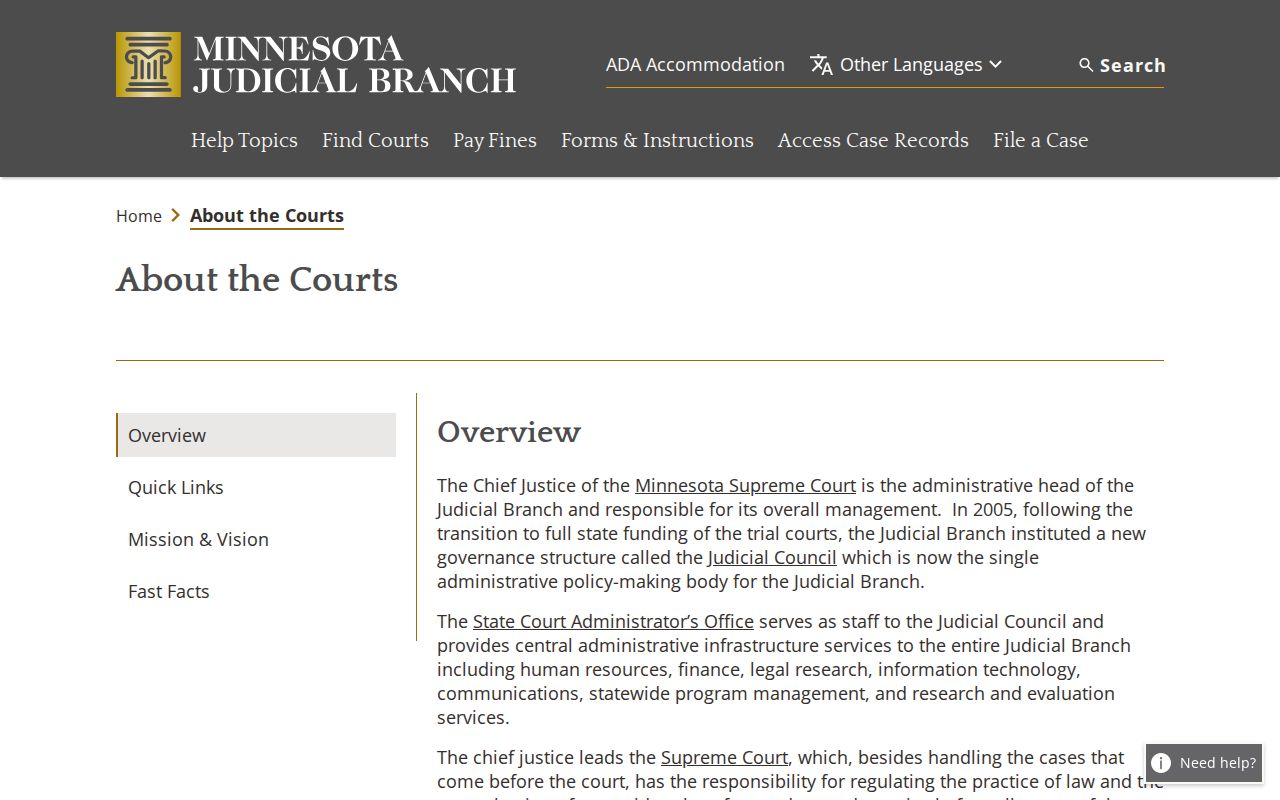
A city case stays local until it is filed in District Court. Minnesota's three-level structure explains why that handoff matters. The state runs a Supreme Court, a Court of Appeals, and one District Court for trial matters, as the state's description of that hierarchy lays out. A city ordinance matter is not an appeal, and the appellate courts do not handle warrant questions. A McLeod County city case that escalates goes to McLeod County District Court, not upward.
Warrant flow: city citation › city clerk or municipal court › McLeod County District Court if the case is filed there › sheriff's active list and dispatch confirmation. Federal fugitive questions follow a separate path, and the county's most wanted page explains that boundary.